
Criminal Mischief in New Jersey
Property Damage. Real Criminal Charges.
In New Jersey, criminal mischief is the crime of damaging, destroying, or tampering with property. People often think of it as “just vandalism” or “a prank,” but under New Jersey law it can mean hefty fines, restitution, a permanent record, and even state prison, depending on the amount of damage and what kind of property is involved.
Criminal mischief is governed by N.J.S.A. 2C:17-3, and it covers a wide range of conduct—everything from graffiti and broken windows to damaging utilities, grave sites, or research facilities.
If you or a loved one has been charged with criminal mischief in New Jersey, you’re not just dealing with an angry property owner—you’re facing the State, and you should talk with an experienced criminal defense lawyer.
How Attorney Mark Bailey Approaches Criminal Mischief Cases
Attorney Mark Bailey understands that criminal mischief charges can grow out of:
-
Fights and arguments that get out of hand
-
“Pranks” or immature behavior
-
Emotional breakups or family disputes
-
Mistaken identity or assumptions about who caused the damage
-
Situations involving alcohol, stress, or peer pressure
He takes a selective, hands-on approach, limiting the number of serious matters he accepts so he can:
-
Review police reports, photos, videos, and repair estimates
-
Challenge the claimed amount of damage, which directly affects the degree of the charge
-
Explore whether the damage was accidental vs. intentional
-
Look for ways to downgrade, divert, or resolve the case in a way that protects your record and minimizes penalties
His goal is to keep a single incident—especially for young or first-time offenders—from becoming a lifetime criminal label.
What Is Criminal Mischief? – N.J.S.A. 2C:17-3
Under N.J.S.A. 2C:17-3, a person commits criminal mischief if they:
-
Purposely or knowingly damage the tangible property of another; or
-
Damage the tangible property of another recklessly or negligently in the employment of fire, explosives, or other dangerous means; or
-
Tamper with the tangible property of another so as to endanger person or property (for example, interfering with utilities, transportation, or safety devices).
Examples include:
-
Breaking windows, doors, or vehicles during an argument
-
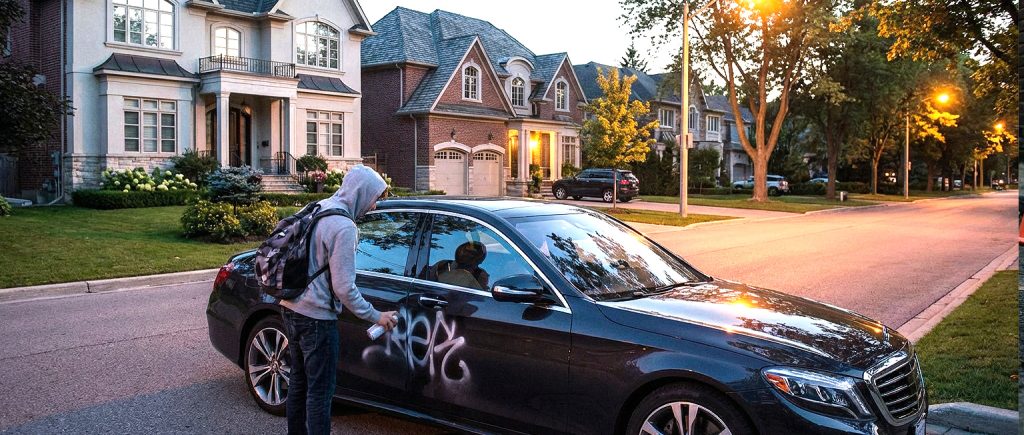
Spray-painting or tagging buildings, fences, or vehicles (graffiti)
-
Damaging or tampering with electric, gas, water, or phone lines
-
Damaging grave sites, headstones, or mausoleums
-
Interfering with or damaging public transportation, research facilities, or communication equipment
The type of property, the amount of damage, and whether anyone was injured all affect how serious the charge is.
Degrees & Penalties for Criminal Mischief
Criminal mischief in New Jersey can range from a disorderly persons offense in Municipal Court to a second-degree felony in Superior Court. The grading depends mainly on dollar amount and type of property.
Disorderly Persons Criminal Mischief
Property Damage: $500 or Less
When the total damage is $500 or less, criminal mischief is usually a disorderly persons offense. Possible penalties include:
-
Up to 6 months in the county jail
-
Fines up to $1,000
-
Restitution to the property owner (paying for repairs/replacement)
-
Community service and probation
-
A criminal record that shows up on background checks
Fourth-Degree Criminal Mischief
Damage Between $500 and $2,000, or Certain Types of Property
Criminal mischief is a fourth-degree crime (a low-level felony/indictable offense) when:
-
The amount of damage is between $500 and $2,000, or
-
The offense causes damage to certain types of property, such as:
-
An aviation facility, airport, landing field, or air traffic device
-
Gas, oil, or water pipes
-
Telephone or telecommunications lines
-
Penalties for a fourth-degree crime can include:
-
Up to 18 months in New Jersey State Prison
-
Fines up to $10,000
-
Felony record
-
Restitution and community service
Third-Degree Criminal Mischief
Damage $2,000+ or Special Circumstances
Criminal mischief is a third-degree crime when:
-
The damage is $2,000 or more, or
-
The offense causes a substantial interruption of public communication, transportation, supply of water, gas, or power, or other public services, or
-
It involves damaging or destroying:
-
Property at a research facility
-
A grave, crypt, or mausoleum
-
-
The conduct results in bodily injury to another person
Penalties for a third-degree crime:
-
3 to 5 years in state prison
-
Fines up to $15,000
-
Restitution and community service
-
Felony record with long-term consequences for employment and licensing
Second-Degree Criminal Mischief
When Someone Dies as a Result
Criminal mischief becomes a second-degree crime—the same level as robbery or some sex offenses—when:
-
The offense impairs or interrupts any public service, and
-
That interruption causes the death of another person
Penalties for a second-degree crime:
-
5 to 10 years in New Jersey State Prison
-
Fines up to $150,000
-
Presumption of state prison, even for many first offenders
Graffiti & Mandatory Community Service
When criminal mischief involves graffiti, New Jersey law requires mandatory community service, including time devoted to removing or cleaning graffiti.
Even in lower-level cases, the court can order:
-
At least 20 days of community service
-
Restitution to the property owner
-
Participation in specific cleanup or restorative programs
For young people, graffiti charges can have serious consequences in school, future employment, and military or college applications.
Collateral Consequences of a Criminal Mischief Conviction
Beyond jail or fines, a conviction for criminal mischief can mean:
-
A permanent criminal record for a property offense
-
Trouble with background checks for jobs, apartments, or loans
-
Problems for students (school discipline, scholarships, campus housing)
-
Possible immigration consequences for non-citizens
-
Issues in family court, especially if the incident happened in a domestic context
For juveniles, criminal mischief can result in juvenile delinquency findings, probation, restitution, and community service—potentially affecting future opportunities.
Defenses & Strategies in Criminal Mischief Cases
Every case is different, but common defense issues include:
1. Identity – “Who Actually Did It?”
Was it really you? Key questions:
-
Is there video clearly showing the person?
-
Are witnesses reliable, or is it based on assumptions?
-
Were multiple people present, with unclear roles?
If the State can’t prove beyond a reasonable doubt that you caused the damage, they don’t have a case.
2. Intent & State of Mind
Criminal mischief usually involves purposeful or knowing damage, or reckless/negligent damage using dangerous means.
-
Was the damage actually accidental?
-
Did you reasonably believe you had permission to be there or handle the property?
-
Was this a genuine mistake, not a malicious act?
Showing lack of criminal intent can be a powerful defense.
3. Amount of Damage (Valuation)
Because the dollar amount of the damage controls the degree of the charge, it’s crucial to challenge:
-
Inflated or unsupported repair estimates
-
Claims that items were “totaled” when they could be repaired for less
-
Attempts to stack or aggregate unrelated incidents
Reducing the alleged damage from $2,100 to $1,800, for example, can drop a case from third-degree to fourth-degree, dramatically lowering the stakes.
4. Type of Property & “Public Service” Claims
Third- and second-degree charges often rely on claims that you:
-
Interrupted public utilities or services, or
-
Damaged sensitive or protected property (grave sites, research facilities, infrastructure)
A careful review of the facts may show that:
-
The interruption was minor or brief, not “substantial”
-
The property was not what the statute defines (e.g., not a “research facility”)
These issues can be the difference between a felony and a disorderly persons offense.
5. Negotiation, Diversion & Damage Control
Especially for first-time offenders, juveniles, or cases with limited damage, Attorney Mark Bailey may pursue:
-
Dismissal where the evidence is weak
-
Downgrades to lesser offenses or municipal ordinances
-
Pre-Trial Intervention (PTI) or other diversion for eligible indictable offenses
-
Resolutions focused on restitution, counseling, and community service rather than jail
He will also advise on expungement options down the line, so one mistake doesn’t follow you forever.
How Mark Bailey Can Help
When you retain Mark A. Bailey for a criminal mischief case, he will:
-
Obtain and review police reports, photos, videos, and repair estimates
-
Analyze whether the State can prove identity, intent, and amount of damage
-
Challenge overcharging and inflated valuations
-
Negotiate with prosecutors for dismissals, downgrades, diversion, or reduced penalties
-
If necessary, prepare your case for trial to hold the State to its burden of proof
His mission is to protect your record, your finances, and your future.
The Law Office of Mark A. Bailey is committed to defending individuals accused of property and vandalism-related offenses and fighting for the best possible outcome in every case.
Contact Mark Bailey today for a confidential consultation to discuss your criminal mischief charge, your rights, and the best strategy for moving forward.
 1309 Bound Brook Road