
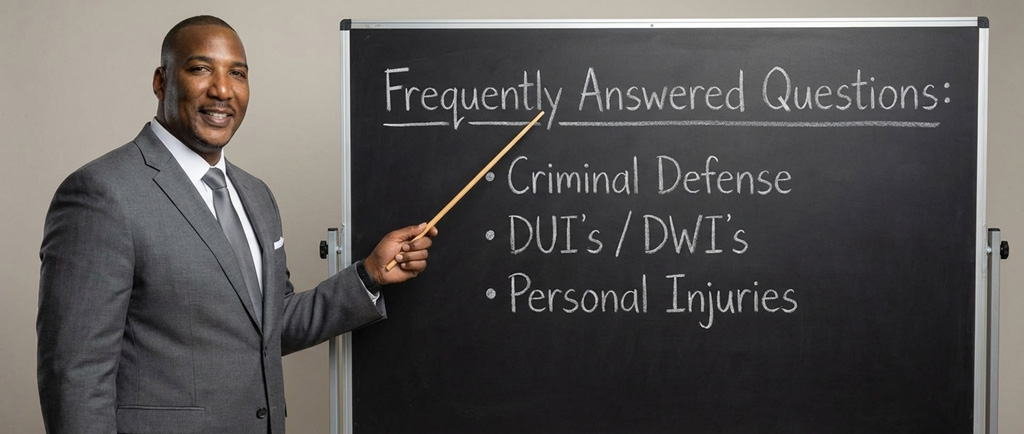
When you’re facing a criminal charge, a DUI, or the aftermath of a serious injury, it’s normal to have a lot of questions—and to feel overwhelmed by confusing legal terms and conflicting information. This FAQ section is designed to give you clear, straightforward answers to some of the most common questions clients ask Attorney Mark A. Bailey.
These answers are meant to help you understand your rights, what to expect, and what your next steps might be. They are not a substitute for legal advice about your specific situation. If you have been arrested, charged, or injured, the best thing you can do is contact our office to discuss your case directly with Mark A. Bailey, Esq.
Criminal Defense FAQs
Q: I’ve been arrested. What should I do first?
A: Stay calm, do not resist, and do not explain your side of the story to police. Clearly say,
“I want to remain silent. I want a lawyer.”
Then contact a criminal defense attorney as soon as possible so your rights are protected from the very beginning.
Q: Do I have to talk to the police if they want to “just ask a few questions”?
A: No. You have the right to remain silent whether you are under arrest or not. Anything you say can be used against you later. You can politely say,
“I do not wish to answer questions without a lawyer present.”
Q: If I’m innocent, why do I need a lawyer?
A: Innocent people can be charged, misunderstood, or misquoted. A lawyer makes sure evidence is gathered correctly, your rights are respected, and your side of the story is presented in a clear, strategic way.
Q: What’s the difference between a misdemeanor and a felony?
A: Generally, misdemeanors carry shorter jail times and lower fines, while felonies involve more serious penalties, including possible prison time and long-term consequences for employment, housing, and more. Exact definitions and penalties depend on state law.
Q: Will I have a criminal record if I’m charged?
A: Being charged is not the same as being convicted, but arrest and court records may still exist. Depending on the case and state law, you may later qualify for expungement or record-sealing. An attorney can review your options.
DUI / DWI FAQs
Q: I was pulled over for DUI. Do I have to answer questions about where I was or what I drank?
A: No. You must provide your license, registration, and insurance, but you do not have to answer questions about drinking, drugs, or where you were coming from. You can politely say you’d like to speak with a lawyer before answering any questions.
Q: What happens if I refuse the breath test?
A: Refusal can lead to automatic license suspension and other penalties separate from the DUI charge itself. The exact consequences depend on state law and whether it’s a first or repeat offense. Talk to a DUI attorney right away if you refused or are thinking about refusing a test.
Q: Are field sobriety tests (walking the line, following a pen with my eyes) required?
A: In many places, field sobriety tests are voluntary, but officers often don’t make that clear. Poor performance can be used as evidence against you. An attorney can challenge how the tests were given and whether they were reliable.
Q: Can I still be charged with DUI if I blew under the legal limit?
A: Yes. You can be charged if police claim your ability to drive was impaired by alcohol, drugs, or a combination, even if your breath test is below the legal limit. Prescription and over-the-counter medications can also be an issue.
Q: Do I really need a lawyer for a first-time DUI?
A: A first offense can still mean fines, license suspension, higher insurance rates, and a permanent record. A DUI lawyer can look for weaknesses in the stop, testing, and paperwork, and may help reduce or avoid some of the consequences.
Personal Injury FAQs
Q: I was hurt in an accident. What should I do right away?
A: Your health comes first. Get medical treatment, even if you feel “okay” at first. Then, if possible:
- Take photos of the scene, vehicles, and injuries
- Get names and contact info for witnesses
- Avoid posting details on social media
- Contact a personal injury attorney before speaking with insurance adjusters
Q: Do I really need a lawyer if the insurance company contacted me?
A: Insurance companies work to limit what they pay, even when liability seems obvious. An attorney can deal with the adjuster for you, calculate the full value of your damages, and fight for fair compensation.
Q: What kinds of compensation can I recover after an accident?
A: Depending on the case, you may be able to recover money for:
- Medical bills and future treatment
- Lost wages and loss of earning capacity
- Pain and suffering
- Property damage
- Out-of-pocket expenses related to the injury
A personal injury lawyer can explain what may apply in your situation.
Q: How long do I have to file a personal injury claim?
A: Every state has a statute of limitations that sets a deadline for filing a lawsuit. If you miss it, you may lose your right to recover anything. Because these deadlines vary and can have exceptions, it’s important to talk to a lawyer as soon as you can.
Q: What if I was partly at fault for the accident?
A: You may still be able to recover compensation, depending on how your state handles shared fault. Some states reduce your recovery by your percentage of fault; others bar recovery if you’re above a certain percentage. A lawyer can help you understand how those rules apply to your case.
Q: How much does it cost to hire a personal injury lawyer?
A: Many personal injury attorneys work on a contingency fee, meaning you don’t pay attorney’s fees unless they recover money for you. The fee is then a percentage of the settlement or verdict, explained up front in your agreement.
Important Reminder / Disclaimer
These FAQs are general information only and are not legal advice for your specific situation. Laws differ from state to state, and even small details can change your legal options.
If you’ve been arrested, charged with DUI, or injured in an accident, contact Mark A. Bailey, Attorney at Law to discuss your case directly and get advice tailored to your circumstances.
 1309 Bound Brook Road