
Federal Crimes in New Jersey
Understanding Federal Charges – and How Mark Bailey Can Help
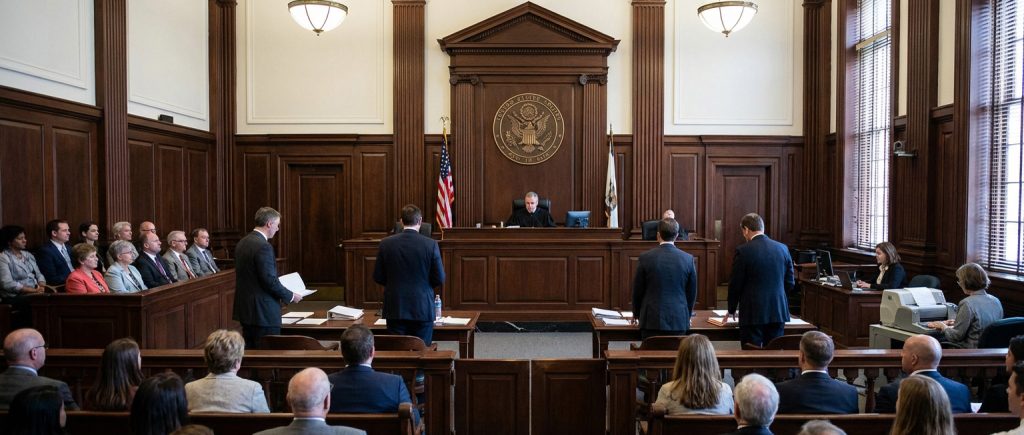
Being charged with a federal crime is very different from facing a typical state case. Federal prosecutions involve powerful agencies (like the FBI, DEA, ATF, IRS, and Homeland Security), experienced federal prosecutors, and complex laws with harsh sentencing guidelines. Federal criminal cases in New Jersey are heard in the U.S. District Court for the District of New Jersey, with courthouses in Newark, Trenton, and Camden.
Federal courts are courts of limited jurisdiction—they only hear cases that involve violations of federal law, the U.S. Constitution, or specific federal interests, such as crimes that cross state lines, use federal programs or systems, or occur on federal property.
The U.S. Attorney’s Office for the District of New Jersey prosecutes federal crimes ranging from terrorism and public corruption to drug trafficking, fraud, cybercrime, firearms offenses, and child exploitation.
If you learn that you are under federal investigation, have received a target letter, or have been indicted, you are facing some of the most serious consequences in the justice system. You need experienced federal defense counsel immediately.
How Attorney Mark Bailey Approaches Federal Cases
Attorney Mark Bailey understands that federal cases are high-stakes, detail-driven, and often built over months or years before an arrest is ever made. He takes a selective, hands-on approach, limiting the number of serious matters he accepts so he can devote substantial time and attention to each case.
When you retain Mark Bailey in a federal matter, he will:
-
Analyze the investigation – review search warrants, wiretaps, subpoenas, and reports from agencies like FBI, DEA, ATF, IRS, and DHS
-
Evaluate the charges and statute – clarify precisely what federal law is alleged to have been violated and what the government must prove
-
Assess guideline exposure – estimate your potential sentence under the Federal Sentencing Guidelines, including enhancements and criminal history scoring
-
Engage early with prosecutors, when appropriate, to negotiate, limit charges, or explore non-trial resolutions
-
Prepare a strategic defense, whether that means challenging the indictment, litigating motions, or going to trial in federal court
His goal is to reduce your exposure, protect your rights, and build the strongest possible defense in a system that can feel stacked against you.
What Is a “Federal Crime”?
A federal crime is a violation of U.S. law enacted by Congress and prosecuted in federal court. Federal jurisdiction commonly arises when:
-
The conduct crosses state lines or involves interstate commerce (e.g., wire transfers, mail, the internet)
-
The offense involves federal property, programs, or agencies (e.g., federal buildings, federal benefits)
-
Congress has chosen to regulate the conduct nationally (e.g., certain drug, firearms, immigration, and fraud offenses)
Only the federal government—through the U.S. Attorney’s Office—can bring a federal criminal case, usually after an investigation coordinated with a federal law enforcement agency.
Common Types of Federal Charges
While federal law covers hundreds of offenses, some of the more frequently prosecuted categories include:
-
Drug trafficking and distribution
-
Large-scale narcotics cases, importation through ports, interstate trafficking, conspiracy, and “drug kingpin” prosecutions
-
-
Fraud and white-collar crimes
-
Wire fraud, mail fraud, bank fraud, healthcare fraud, securities fraud, PPP/benefits fraud, tax evasion
-
-
Firearms offenses
-
Possession of a firearm by a prohibited person, firearms in furtherance of a drug trafficking or violent crime, illegal firearm trafficking
-
-
Cybercrime & internet offenses
-
Computer intrusions, online fraud schemes, identity theft, hacking, and certain cryptocurrency cases
-
-
Child exploitation & pornography offenses
-
Online enticement, production, distribution, and possession of child sexual abuse material
-
-
Immigration offenses
-
Illegal reentry, alien smuggling, document fraud related to immigration benefits
-
-
Public corruption & bribery
-
Corruption involving public officials, government contracts, or federal programs
-
Many federal cases also include conspiracy charges, which can broaden liability to conduct carried out by others within the alleged agreement.
Federal Investigations & Grand Jury Practice
Unlike many state cases, federal prosecutions are often preceded by lengthy investigations involving:
-
Subpoenas for bank, phone, and business records
-
Interviews of witnesses and cooperating defendants
-
Search warrants for homes, offices, and electronic devices
-
Surveillance, controlled buys, or undercover operations
Most felony-level federal cases are brought through a grand jury indictment. The grand jury hears from government witnesses and decides whether there is probable cause to charge. Defendants typically do not testify, and the process is secret.
If you receive a target letter, a subpoena, or a grand jury summons, it is a strong sign that you are on the government’s radar—and you should speak to counsel immediately before having any contact with agents or prosecutors.
Federal Sentencing & the Guidelines
If there is a conviction—whether after trial or through a plea—the judge will use the Federal Sentencing Guidelines as a starting point. The Guidelines:
-
Assign each type of offense a base offense level
-
Increase or decrease the level based on specific factors (loss amount, drug quantity, weapon use, role in the offense, obstruction, acceptance of responsibility, etc.)
-
Combine the offense level with your criminal history category to create an advisory sentencing range
Many federal statutes also include mandatory minimum sentences, particularly in drug and firearms cases, which can sharply limit a judge’s discretion.
Although the Guidelines are advisory rather than strictly binding, judges pay close attention to them. A smart defense strategy focuses not only on guilt or innocence, but also on:
-
Challenging enhancements that raise the guideline range
-
Arguing for favorable adjustments and departures
-
Presenting strong mitigation—family responsibilities, health issues, work history, rehabilitation—to support a lower sentence
Why Early Representation in a Federal Case Matters
Federal cases move on tight schedules, and prosecutors are often well-prepared long before an arrest. Having counsel like Mark Bailey involved early can:
-
Prevent damaging statements to agents
-
Influence charging decisions before an indictment is filed
-
Protect your rights during searches, interviews, and bail proceedings
-
Preserve critical evidence and locate favorable witnesses
-
Clarify whether cooperation or plea discussions make sense in your situation
Waiting to seek help until after indictment—or until a plea is already on the table—can severely limit your options.
The Law Office of Mark A. Bailey represents individuals in serious federal matters, including drug, fraud, firearms, child exploitation, and other high-stakes cases in the U.S. District Court for the District of New Jersey.
Contact Mark Bailey today for a confidential consultation to discuss your federal charges, your rights, and the best strategy for protecting your future.
 1309 Bound Brook Road