
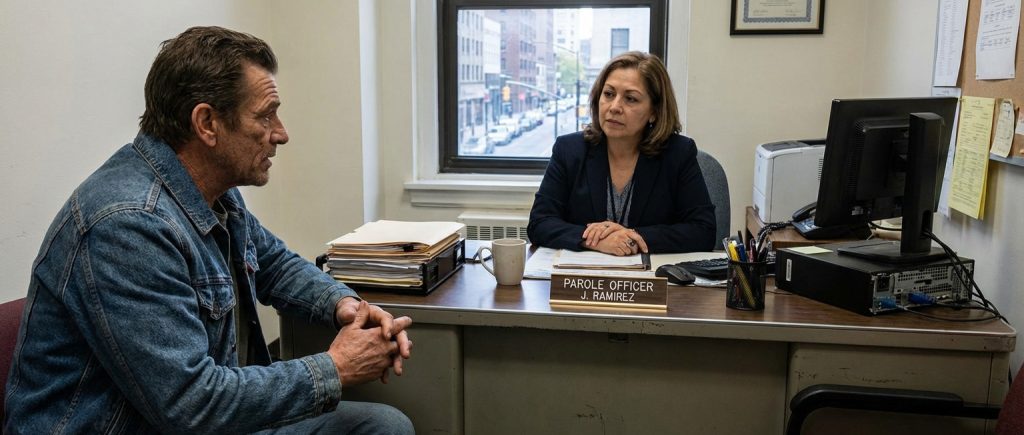
Parole Violations in New Jersey
What Happens If You Violate Parole – and How Mark Bailey Can Help
In New Jersey, parole allows someone who has been serving a state prison sentence to return to the community under supervision before the end of their maximum term. But that freedom comes with strict conditions. If the New Jersey State Parole Board believes you broke those conditions, you can be charged with a parole violation and face being sent back to prison—sometimes for years.
Parole in New Jersey is governed by Title 30 and related regulations of the New Jersey State Parole Board. When you’re released, you sign parole certificates or conditions that spell out what you must and must not do while under supervision.
If you or a loved one has been hit with a parole warrant, “blue sheet,” or notice of violation, you are at serious risk of losing your freedom again. Having an experienced attorney on your side can make a huge difference.
How Attorney Mark Bailey Approaches Parole Violation Cases
Attorney Mark Bailey understands that parole violations are often based on more than just “bad behavior.” Many cases involve:
-
Addiction or relapse
-
Unstable housing or employment
-
Missed appointments or communication problems
-
Confusing or unrealistic conditions
-
Allegations tied to new charges that may be weak or unproven
He takes a selective, hands-on approach, limiting the number of serious matters he accepts so he can:
-
Review your original sentence, parole conditions, and violation reports
-
Analyze exactly what the Parole Board claims you did wrong
-
Gather proof of employment, treatment, family responsibilities, and compliance
-
Help you address underlying issues (treatment, housing, documentation) before your hearing
-
Fight for the least restrictive outcome—ideally, keeping you in the community or minimizing any return to custody
His goal is to show that you are more than a violation report—and that you deserve another chance or a reduced sanction, not a long return to prison.
What Is a Parole Violation?
When you’re released on parole, you agree to a list of conditions, which usually include:
-
Reporting regularly to your parole officer
-
Obeying all laws (no new criminal offenses)
-
Staying within approved residence and travel areas
-
Following curfew and supervision instructions
-
Drug and alcohol restrictions, including random testing
-
Avoiding contact with certain people or places
-
Attending treatment, counseling, or programs as ordered
A parole violation happens when the Parole Board believes you:
-
Committed a new offense, and/or
-
Failed to follow one or more conditions of parole (“technical violation”).
Examples:
-
Getting arrested for a new crime (even if the case is still pending)
-
Failing drug tests or refusing to test
-
Missing meetings or absconding (disappearing from supervision)
-
Leaving the state without permission
-
Contacting victims or co-defendants when prohibited
When a parole officer believes a violation occurred, they can lodge a parole warrant, and you may be taken back into custody pending a hearing.
The Parole Violation Process
While parole violations don’t follow the exact same process as a criminal trial, there is still a structure and important rights you have along the way.
Although the details can vary, a typical New Jersey parole violation case looks like this:
-
Warrant & Arrest
-
The Parole Board issues a warrant; you are arrested and held (often in a county jail) pending further action.
-
-
Preliminary / Probable Cause Hearing (in many cases)
-
A parole officer or hearing officer reviews whether there is probable cause to believe you violated parole.
-
In some situations (especially very serious or obvious violations), the case may move more quickly toward a full revocation hearing.
-
-
Revocation Hearing
-
You appear before a Parole Board hearing officer or panel.
-
This is not a jury trial, but you have the right to an attorney, to present evidence, and to question adverse witnesses in many circumstances.
-
The standard of proof is generally lower than “beyond a reasonable doubt”—often something like a preponderance or substantial credible evidence, depending on the type of violation.
-
The Board decides whether a violation occurred and, if so, what sanctions to impose.
-
-
Decision & Future Eligibility Date (FED)
-
If the Board finds a violation, they can:
-
Issue a reprimand or warning,
-
Impose intermediate sanctions (tighter supervision, programs),
-
Or revoke parole and set a new Future Eligibility Date, meaning how long you must stay in custody before being considered for parole again.
-
-
For serious violations or new criminal conduct, the FED can be years away.
-
Because the Parole Board can essentially send you back to serve more of your original sentence, a violation can be just as serious as a brand-new criminal case.
Possible Consequences of a Parole Violation
Consequences depend on factors like:
-
The nature of the violation (technical vs. new crime)
-
The seriousness of your underlying offense
-
Your prior parole history (first violation vs. multiple)
-
Evidence of rehabilitation and stability vs. ongoing problems
Outcomes can include:
-
Continued parole with the same conditions
-
Tightened supervision or additional conditions (more reporting, treatment, curfew, no-contact orders)
-
Short-term return to custody with a relatively short FED
-
Full parole revocation, sending you back to state prison with a long FED and fewer chances of release in the near future
For many people, even a few additional months in custody can cost jobs, housing, relationships, and progress they’ve made. That’s why presenting a strong case at the violation hearing is so important.
Common Defenses & Strategies in Parole Violation Cases
Every case is unique, but some common defense themes and strategies include:
-
Did the violation actually happen?
-
Challenging inaccurate or incomplete reports, mistaken identity, or bad assumptions.
-
Questioning the reliability of drug tests, hearsay, or untested allegations.
-
-
No willful violation / mitigating circumstances
-
Showing that missed appointments, travel issues, or curfew problems were due to factors outside your control (medical emergencies, transportation breakdowns, work conflicts, miscommunication).
-
Demonstrating that any non-compliance was not intentional and has been corrected.
-
-
New charges not yet proven
-
Arguing that a mere arrest should not automatically justify a harsh parole sanction, especially when the underlying criminal case is weak, pending, or likely to be dismissed.
-
-
Substantial compliance & rehabilitation
-
Highlighting everything you’ve done right: steady employment, clean tests (other than isolated issues), participation in treatment, support of family, community involvement.
-
Showing that sending you back to prison will undo progress and isn’t necessary to protect the public.
-
-
Alternative plan
-
Presenting the Board with a concrete plan: new treatment, a better housing arrangement, updated employment, counseling, or other steps that address their concerns without a long return to custody.
-
Attorney Mark Bailey will:
-
Get and review the violation reports, parole file, and any related police reports
-
Meet with you and, where helpful, your family or support network
-
Collect documents, letters, and treatment records to support your case
-
Help you prepare to testify effectively and honestly
-
Argue for the least restrictive response—keeping you in the community if possible, or minimizing your time inside if not
Parole vs. Probation – Know the Difference
It’s easy to confuse parole with probation, but they’re very different:
-
Probation is a sentence imposed by a judge instead of or in addition to jail/prison, supervised by county probation.
-
Parole is early release from state prison, supervised by the New Jersey State Parole Board.
Violations are handled in different systems, under different rules. If you’re not sure which one applies—or you have both parole and probation issues—Mark Bailey can help you sort it out and build a coordinated strategy.
Why You Shouldn’t Face a Parole Violation Alone
Some people think, “It’s just parole—they’ll do what they want anyway.” But having an attorney can:
-
Make sure your side of the story is fully heard
-
Prevent you from admitting to more than what’s in the report
-
Help you document progress and mitigation that the Parole Board might otherwise overlook
-
Argue for shorter FEDs or community-based responses instead of long returns to prison
The difference between going back for years and going home sooner often comes down to how well your case is presented.
The Law Office of Mark A. Bailey is committed to defending individuals on parole, fighting for fair treatment, and working to keep them in the community whenever possible.
Contact Mark Bailey today for a confidential consultation to discuss your parole violation, your options, and the best strategy for moving forward.
 1309 Bound Brook Road